In this 21st century, courses are no longer static; they are upgrading, evolving, and reshaping themselves as fast as the world around us. Gone are the days when a single degree could guarantee lifelong success. Today, employers look beyond marks and certifications; they value skills, adaptability, and real-world readiness. For students, this shift brings both opportunity and confusion. With new-age careers emerging and traditional roles being redefined, choosing the right career development course can give you a powerful edge.
Whether you are still in school, pursuing your undergraduate degree, or planning your next academic move, investing in the right skill-based course can shape your confidence, clarity, and employability. As the right course doesn’t just prepare you for a job, but prepares you for the future, it is with the help of Career Counselling that you get to find out which is the best suited career development course for you.
Today, in this blog, we are going to share top 5 career development courses that students can pursue today and eventually how career counselling experts help them pick the right course. So, without further ado, let’ explore 5 Career Development Courses that students should consider pursuing today.
1. Data Analytics & Data Science
Data is the new currency of the digital world, and the ability to analyse and interpret it has become one of the most sought-after skills across industries. A course in Data Analytics or Data Science equips students with skills like data visualisation, statistical analysis, and decision-making using real data. These courses are crucial because every sector; be it healthcare, finance, marketing, education, or technology, relies on data to improve performance and forecast trends.
The future potential is massive, with roles such as Data Analyst, Business Intelligence Analyst, and Data Scientist witnessing consistent global demand. For students, the biggest benefit lies in problem-solving and analytical thinking, which are transferable skills across multiple careers. Learning data tools early not only boosts employability but also builds a strong foundation for advanced tech-driven roles.
2. Digital Marketing & Growth Strategy
As businesses continue to shift online, digital marketing has become a cornerstone of modern success. A Digital Marketing course introduces students to SEO, social media marketing, content strategy, performance advertising, and branding analytics. These skills are crucial because digital presence now determines visibility, credibility, and growth for businesses worldwide. The future potential is vast, with brands constantly searching for professionals who understand consumer behaviour in the digital space.
Students can explore careers as Digital Marketers, Growth Strategists, Content Managers, or even entrepreneurs managing their own brands. One of the biggest benefits of this course is its flexibility; students can freelance, work remotely, or start their own ventures. Additionally, it nurtures creativity, strategic thinking, and communication, skills that are valuable in almost every professional field.
3. Artificial Intelligence & Machine Learning Basics
Another career development course that students can pursue today is Artificial Intelligence and Machine Learning. Artificial Intelligence (AI) is no longer a futuristic concept; it is already shaping how we live, learn, and work. Courses in AI and ML fundamentals help students understand algorithms, automation, predictive models, and intelligent systems. These courses are crucial because AI is being integrated into industries such as finance, healthcare, cybersecurity, education, and even creative fields.
The future potential is immense, as AI-driven roles continue to expand globally with high growth and lucrative opportunities. For students, the benefits lies in staying future-ready and gaining exposure to advanced technologies at an early stage. Even non-technical students benefit from understanding how AI works, as it engances logical thinking and problem-solving. Learning AI basics today prepares students to thrive in tomorrow’s innovation-driven economy.
4. Entrepreneurship & Startup Management
In a world driven by innovation, entrepreneurship has emerged as a powerful career path. A course in Entrepreneurship or Startup Management teaches students how to turn ideas into viable businesses. From ideation and market research to funding, branding, and scaling, these courses develop a holistic understanding of how businesses are built. This course is crucial because it equips students to create opportunities rather than wait for them.
The future potential is strong, especially with growing startup ecosystems, incubators, and global investor interest. Even students who don’t start a business benefit immensely because employers value entrepreneurial thinking, leadership, and risk management skills This course builds confidence, creativity, financial literacy, and decision-making abilities, making students adaptable professionals capable of thriving in both startups and corporate environments across industries, roles, markets, and evolving global career landscapes worldwide.
5. Communication, Leadership & Soft Skills Development
In today’s competitive academic and professional landscape, mastering people-centric abilities alongside knowledge has become absolutely essential for every aspiring student. While technical skills may get you shortlisted, Soft Skills determine how far you grow. Courses focused on communication, leadership, emotional intelligence, and interpersonal skills are critical for long-term success. These courses are crucial because employers consistently report skill gaps in teamwork, presentation, problem-solving, and leadership among young professionals.
The future potential of strong soft skills is timeless; no matter how technology evolves, human skills will always matter. For students, the benefits are immediate and long-lasting. They learn to express ideas confidently, manage stress, collaborate effectively, and lead with empathy. Strong soft skills not only improve academic performance but also enhance interview success, workplace relationships, and career growth. These skills act as the backbone of every successful career path. They empower students to adapt confidently, influence positively, build trust, resolve conflicts, and excel in diverse, multicultural professional environments worldwide.
Find Out Your Best Suit Career Development Course with MetaApply Career Counselling
As here ends the list of best career development courses for students to pursue today, the question that arises here is which of these is the best suited course for you. While the world follows trends or makes decisions under influence, you must have the complete freedom to pick up a course that you wish to pursue. And so, when it comes to shortlisting the best suited career development course for yourself that you can pursue today, instead of randomly picking up a trend, decide what suits you the best.
To help you figure out a course that aligns with your skills and interests, it is the MetaApply Career Counselling expert that you can trust completely. When you take the MetaApply Psychometric Test, you get an in-depth report of what your strengths, skills, interests, and potential are. After analysing the results and one-on-one counselling sessions, our counsellors help you decide which course will empower you in the future and from where you should pursue it.
So, if you are ready to upgrade your career but don’t know the right course yet, then how about taking MetaApply Career Counselling, first?
Frequently Asked Questions
The best career development course builds practical skills, self-awareness, and industry relevance, such as data analytics, digital marketing, or soft skills training, helping students gain clarity, confidence, employability, and adaptability for changing academic paths and competitive global careers today worldwide.
Future-ready students should choose courses aligned with technology, creativity, and human skills, including AI, data science, sustainability entrepreneurship, and leadership, as these fields offer long-terms success growth, global opportunities, career flexibility, and resilience in an evolving, unpredictable job market worldwide today.
Top 5 future jobs are Data Scientist, AI Engineer, Cybersecurity Specialist, Digital Marketing Strategist, and Sustainability Consultant, as these roles combine technology, problem-solving, innovation, and global demand, offering strong growth prospects, high employability, and long-term relevance across industries worldwide today.
In an age of rapid technological advancements, artificial intelligence, and global competition, academic excellence alone is no longer enough to guarantee your success. While marks and degrees still matter, what truly sets you apart today is how effectively you communicate, adapt, collaborate, and lead. These abilities; knowing as soft skills, play a decisive role in shaping your academic journey, career readiness, and personal growth.
From classrooms and college campuses to interviews and workplaces, soft skills influence every interaction you even have. As expectations from students continue to evolve, developing soft skills early is no longer just beneficial but it is also essential for your future. Today, in this blog, we are going to share what are soft skills, why soft skill development is crucial, and lastly how career counselling experts help you develop the right skills. So, without waiting further, let’s get to the point.
What are Soft Sills and Why Do they Matter?
Imagine, you have all the academic knowledge required to get your first job, but your presentation skills are poor and that’s why you get rejected. How bad will you feel about it? Well, this is the case when you don’t have the required soft skills to survive in the world.
Now as you wonder what soft skills are, then soft skills are a combination of interpersonal abilities, emotional intelligence, communication skills, and behavioural traits that define how you interact with others and handle real-life situations. Unlike technical or hard skills, soft skills are transferable across careers and industries.
Skills such as communication, adaptability, teamwork, problem-solving, and leadership are valued everywhere, regardless of the profession you choose. As a student, your soft skills determine how well you express your ideas, manage pressure, work in groups, and make decisions. They directly influence your classroom performance, college admissions, internships, and future employability.
Why Soft Skill Development is Crucial for You?
In today’s outcome-driven education system, soft skills help you bridge the gap between theoretical knowledge and practical application. Soft skills are not like hard skills that are not transferrable, so irrespective of your industry, soft skills like time management, problem-solving, fluent communication, and more will always be there for you, helping you grow better in life. Here are the reasons why soft skill development is crucial for you in your teenage years.
1. Prepares You for Real-world Challenges
Modern education is no longer limited to textbooks and exams. You are expected to take part in presentations, group projects, debated, internships, and practical assignments. Soft skills give you the confidence and composure to handle these experiences effectively. Skills like time management, problem-solving, and adaptability help you cope with academic pressure and unfamiliar situations. This preparation ensure you do not feel overwhelmed when transitioning from school to college or from education to professional life.
2. Enhances Your Communication and Confidence
Effective communication is one of the most critical soft skills you can develop. Whether you are expressing opinions in class, presenting ideas during group discussions, or appearing for interviews, communication plays a defining role. When you communicate clearly and confidently, you feel more self-assured and articulate. This confidence positively impacts your self-esteem, enabling you to ask questions, seek opportunities, and build meaningful networks; skills that are essential for long-term career growth.
3. Supports Your Personal Growth and Emotional Intelligence
Soft skills are closely connected to emotional intelligence; the ability to understand and manage your emotions while empathising with others. As a student, you may face academic stress, peer pressure, and career-related anxiety. Developing soft skills helps you manage emotions, maintain mental well-being, and respond constructively to challenges. Emotional intelligence also strengthens your relationships with teachers, peers, and family, creating a supportive environment for continuous growth and learning.
4. Builds Your Teamwork and Leadership Abilities
Collaboration is now a core part of education and professional life. Group assignments, team projects, and extracurricular activities require you to work with people from diverse backgrounds. Soft skills teach you how to collaborate respectfully, resolve conflicts, and contribute meaningfully to teams. Over time, these experiences help you develop leadership qualities such as responsibility, initiative, and decision-making. When you build leadership skills early, you are better prepared for managerial, entrepreneurial, and global roles.
5. Improves Your Employability and Career Readiness
Employers today look for individuals who can think critically, communicate clearly, adapt quickly, and work collaboratively. While technical skills may help you secure an interview, your soft skills often determine hiring decisions, career growth, and long-term success. By investing in soft skill development, you become more employable and future ready. You perform better in interviews, adapt to workplace culture faster, and grow consistently in your career; regardless of how industries evolve.
Essential Soft Skills You Should Develop Today!
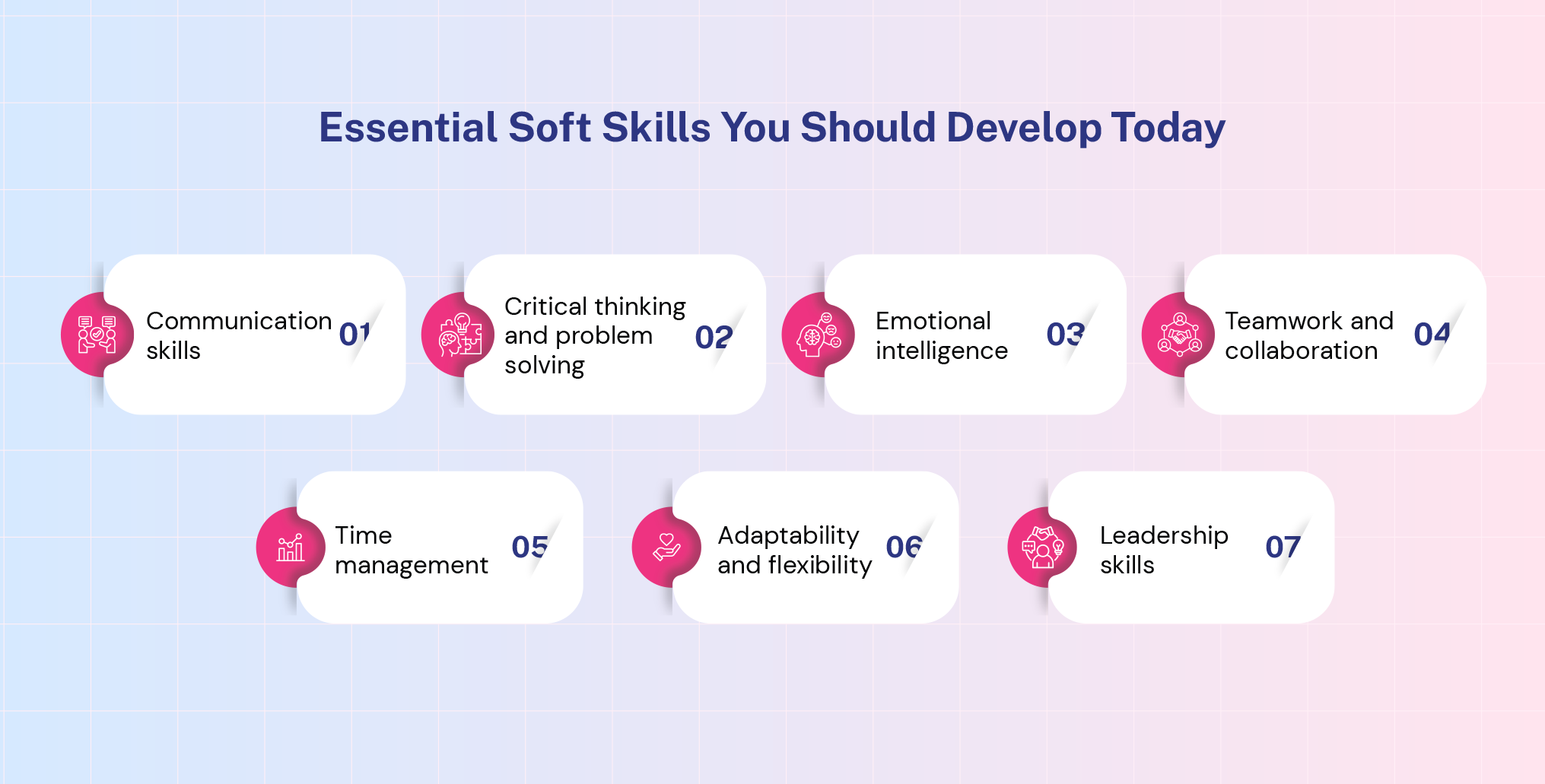
As you wonder what are the crucial soft skills that you must develop today for a long-term career growth and enhance them over time then here is a list.
Role of Career Counselling in Your Soft Skill Development
Even if you understand the importance of soft skills, developing them effectively requires guidance, awareness, and structure. This is where career counselling plays a vital role in your journey. Here’s how they help.
1. Personalised Assessment and Self-awareness
Career counselling experts begin by helping you understand yourself better. Through psychometric test and one-on-one counselling sessions, you gain clarity about your personality traits, strengths, weaknesses, and learning style. This self-awareness forms the foundation of your soft skill development. Once you know where you need improvement; whether it is communication, confidence, or decision-making, you can focus on developing the right skills purposefully.
2. Structured Training and Skill-building
Career counsellors offer structured guidance to help you develop soft skills in a systematic manner. This may include communication workshops, mock interviews, group discussions, leadership activities, and personality development sessions. Practical exposure allows you to apply these skills in real-life scenarios rather than learning them theoretically. Over ime, you become more confident, expressive, and capable of handling both academic and professional challenges.
3. Career Clarity and Goal Alignment
One of the biggest obstacles to soft skill development is confusion about career direction. Career counselling helps you identify career paths that align with your interests, abilities, and goals. When you have clarity about where you want to go, you naturally become more motivated to develop the soft skills required for that path. This ensures your skill development is meaningful, focused, and relevant to your future.
4. Continuous Mentorship and Feedback
Soft skills develop gradually and require consistent guidance and feedback. Career counsellors act as mentors, offering constructive feedback and monitoring your progress over time. This ongoing mentorship helps you refine your behaviour, improve communication, and build emotional resilience. Learning how to receive and apply feedback is itself an essential soft skill that supports long-term personal and professional growth.
5. Preparing You for Global Opportunities
If you aspire to study or work abroad, career counselling becomes even more important. Counsellors help prepare you for global classrooms and workplaces by focusing on cross-cultural communication, adaptability, confidence, and professional etiquette. This holistic preparation ensures you are not only academically eligible but also socially and emotionally ready to thrive in international environments.
Develop the Soft Skills for Tomorrow with MetaApply Career Counselling
As you saw what are some of the crucial soft skills that you need to develop in today’s time and also saw the role of career counselling experts in the same, then what else are you looking for? It is time for you to find a career counsellor who will help you develop these crucial skills in the right manner. This is where MetaApply Career Counselling plays a crucial role. From helping you understand your strengths to making you overcome the skill gaps, our counsellors with the help of the MetaApply Psychometric Test tells you what are the skills that you are missing and how you can develop them to thrive in the professional world. So, if you don’t know which soft skills are your superpower then it is time for you to take MetaApply Career Counselling. Connect with our counsellors today!
Frequently Asked Questions
Soft skills help you communicate confidently, manage emotions, work in team, and adapt to change. They improve academic performance, build self-confidence, support career readiness, and ensure long-term success beyond grades and technical knowledge.
The seven essential soft skills include communication, critical thinking, emotional intelligence, time management, adaptability, teamwork, and leadership. These skills help you handle academic challenges, build relationships, and prepare for future careers effectively.
Ten basic life skills include communication, decision-making, problem-solving, time management, self-awareness, emotional intelligence, adaptability, teamwork, stress management, and leadership, helping you navigate academics, relationships, and real-life responsibilities successfully.
Irrespective of your current academic stage, thinking about your future usually leads you to one of two situations. In the first, you clearly see yourself in the position you have always inspired to reach. In the second, the sheer number of career option leaves you feeling confused, unsure of which direction to take next. In both situations, one thing remains essential: career clarity. To move forward with confidence and purpose, you need to understand what truly suits you. This is where a psychometric test becomes important. It is often the first step towards building a well-planned and successful career.
You may fee reluctant about taking another test, especially when you already have academic pressures to deal with. However, it is important to understand that a psychometric test is not just another academic exam. It does not assess how much you have studied or how well you score. Instead, it focuses on understanding you as an individual. Today, in this blog, we will help you understand what a psychometric test is and why it plays a such a crucial role in shaping your career journey as a student. So, without further ado, let’s get to further understanding.
What is a Psychometric Test?
A psychometric test is a scientific assessment designed to help you understand yourself better. It evaluates your interests, skills, personality traits, aptitude, and behavioural tendencies through structured questions. Unlike academic exams, there are no right or wrong answers. You are simply expected to respond honestly based on how you think, feel, and behave in different situations.
The main purpose of a psychometric test is to identify patterns in your abilities and preferences and map them to suitable career paths. It highlights what you are naturally inclined towards and where your strengths lie. By analysing your responses, the test provides data backed insights that help you make informed career decisions. Instead of relying on assumptions, external pressure, or guesswork, you are able to choose a path that aligns with who you are.
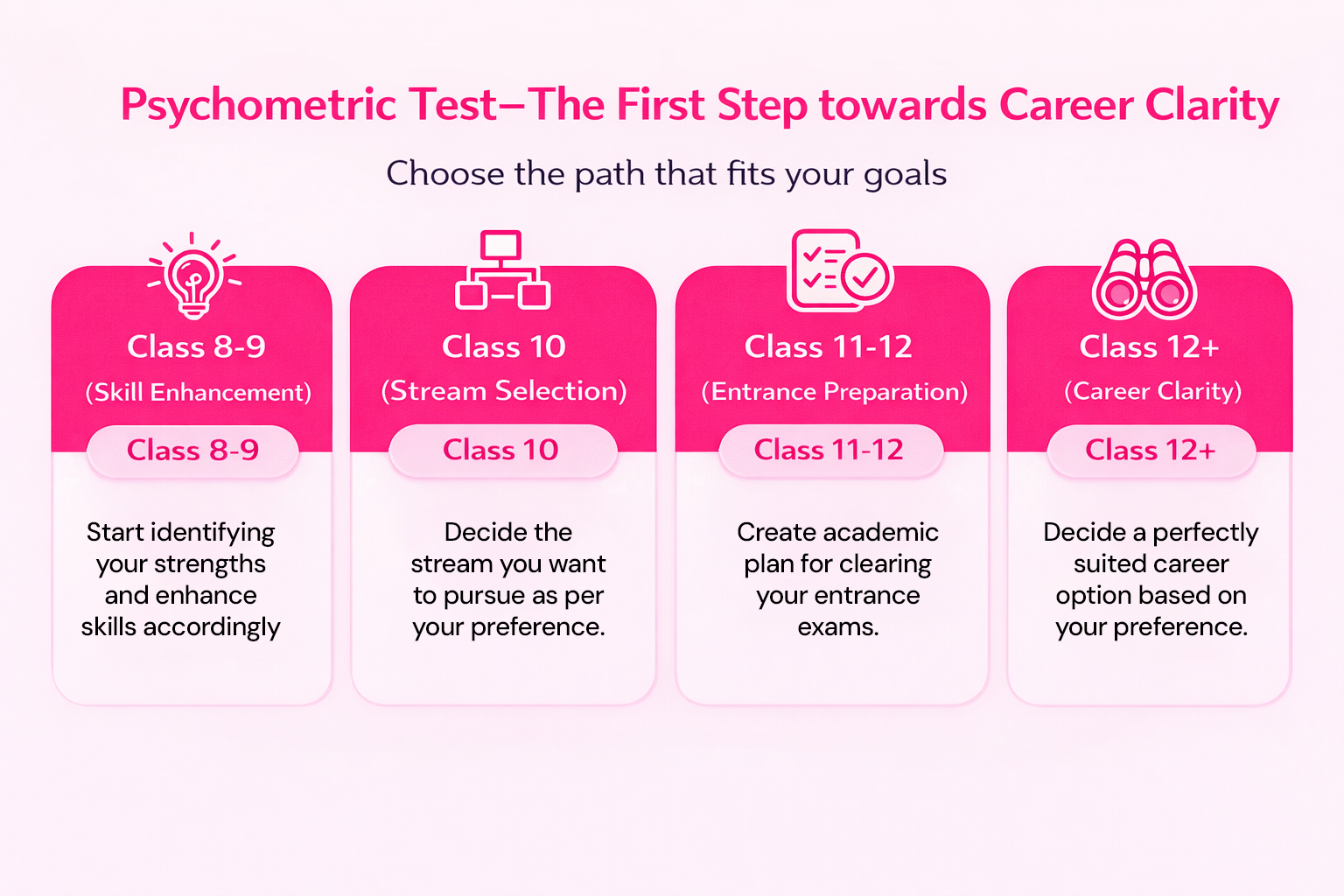
Now, as you may wonder what the right academic stage is to take a psychometric test followed by career counselling, here’s the image for your better understanding.
Why is a Psychometric Test Important for Students?
As a student, you are required to make important academic and career decision at an early stage, often without complete clarity about what suits you best. With the number of career options available today, feeling confused is completely natural. A psychometric test helps you understand yourself better and supports clearer, more confident decisions making for your future. Here is why a psychometric test is important for you, irrespective of your current academic stage.
1. Helps You Gain Clear Career Direction
When you are unsure about which career path to choose, a psychometric test provides much needed direction. It analyses your interests, aptitude, and personality to suggest career options that align with who you are. Instead of feeling overwhelmed by endless possibilities, you receive focused insights that help you understand where you fit best. This clarity makes it easier to shortlist careers and plan your next academic steps. By knowing what suits you, you can avoid random choices and move forward with a clear sense of direction. In this required clarity, it is one-on-one career counselling followed by a psychometric test result, that helps you know yourself better.
2. Identifies Your Strengths Beyond Academics
Academic scores alone do not reflect your complete potential. A psychometric test helps identify strengths beyond marks and grades, such as problem-solving ability, creativity, communication skills, and leadership potential. However, identifying these strengths is only the first step. Through career counselling, these insights are explained to you in a practical and relatable way. A career counsellor helps you understand how your strengths apply to real world careers and academic choices. With this guidance, you are not just aware of what you are good at, but also how to use those abilities effectively. This combination of assessment and counselling builds confidence and helps you connect your strengths to meaningful and realistic career opportunities.
3. Reduces the Risk of Wrong Career Choices
Many students make career decisions influenced by trends, peer choices, or family expectations. While these factors may appear important, they often lead to dissatisfaction or frequent changes later. A psychometric test helps you understand what genuinely suits your interests and abilities. When combined with career counselling, these test results are translated into clear and personalised advice. A career counsellor helps you evaluate different options, understand long ter career implications and make informed choices. This reduces the likelihood of selecting a career that does not align with you. By choosing a path backed by scientific assessment and professional guidance, you save time, effort, and the stress of correcting decisions later.
4. Builds Confidence in Career Decision Making
Making decisions about your future can feel overwhelming when you lack clarity. A psychometric test provide data backed insights that bring structure to your decision making. When these insights are discussed through career counselling, you gain a deeper understanding of why certain careers suit you more than others. This clarity removes self-doubts and confusion. A career counsellor helps you align your interests, strengths, and goals, making the decision-making process smoother. As a result, you feel more confident about your choices. This confidence positively impacts your academics, goal setting, and approach towards challenges, allowing you to stay focused and motivated throughout your career journey.
5. Supports Better Academic and Career Planning
A psychometric test helps you understand which academic paths align with your strengths and interests. However, planning becomes more effective when these insights are supported by career counselling. A career counsellor helps you use your test results to make informd decisions about subjects, streams, courses, and future career options. This guidance ensures that your academic choices are not random or rushed. Instead, they are part of well-structured plan leading towards your long-term goals. With professional counselling, you are able to set realistic expectations, avoid unnecessary course changes, and build a strong foundation for long-term career success and satisfaction.
MetaApply Psychometric Test- A Way to Know Your Strengths!
Career clarity begins with self-awareness, and that is exactly what the MetaApply Psychometric Test helps you achieve. It goes beyond marks and assumptions to uncover your true strengths, interests, aptitude, and personality traits. By understanding what you are naturally inclined towards, you are better prepared to make academic and career choices that genuinely suit you.
However, knowing your strengths is only the starting point. When followed by MetaApply Career Counselling, these insights turn into meaningful guidance and actionable direction. Our expert counsellors help you interpret your results, explore suitable options, and play you next steps with confidence.
In short, the MetaApply Career Counselling is your whole package when combined with the MetaApply Psychometric test and personalised, one-on-one counselling sessions. Together, this helps you in creating a strong foundation for informed decision making, helping you move forward with clarity, confidence and purpose in your academic and professional journey.
So, if you are ready to get the required clarity about your academic life then connect with our counsellors today.
Frequently Asked Questions
A psychometric test helps students gain career clarity by identifying their interests, strengths, and aptitude. It supports informed academic and career decisions, reduces confusion and guides students towards career paths that truly suit them, irrespective of their academic stage.
Psychometric testing is used to assess a student’s abilities, personality, and interests scientifically. It helps match individuals to suitable academic and career option, supporting better decision making and effective career planning with the help of professional guidance.
The main focus of a psychometric test is to understand a student’s natural strengths, preferences, and aptitude. It evaluates behavioural patterns and interests to provide data backed insights that support accurate career and academic guidance.
