Role of Career Counselling After 10th in 2026
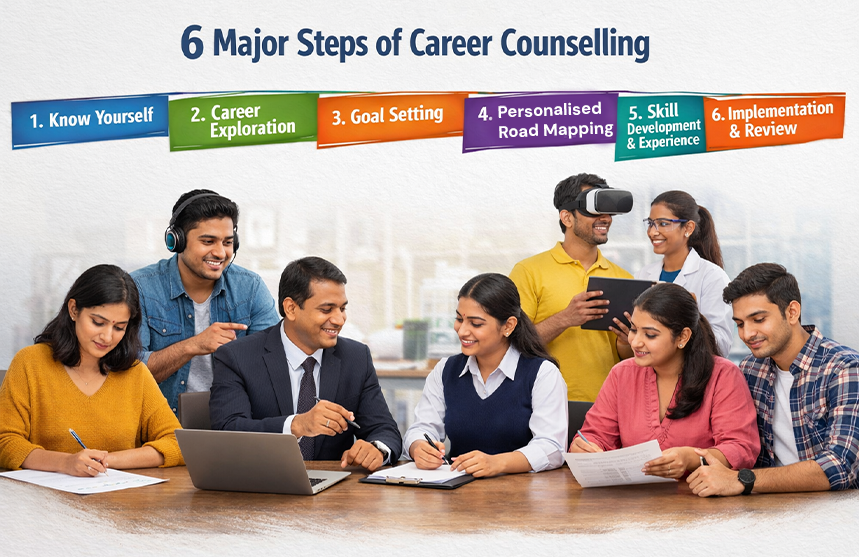
What Are the 5 Steps of Career Counselling?


Imagine you’re building a character in a video game. Before you even start the mission, you get to pick up the skills, strengths, powers, and the kind of world your character will thrive in. Real life isn’t too different, except here, the “character” is you, and the missions are your future opportunities.
For students in classes 8th to 12th, school is the phase where you’re collecting clues about what you’re good at, what excites you, and what kind of challenges you enjoy. But the tricky part is figuring out how all these pieces fit together. That’s where career counselling steps in.
Think of it as a structured, friendly process that helps you understand yourself better and open doors you may not even know existed. Here is a step-by-step understanding of how career counselling process works.
Step 1: Self-Assessment: Understanding Who You Are
The journey begins with turning the spotlight inward. Before thinking of any future plans, it’s important to understand your own personality, strengths, interests, and natural abilities. Self-assessment includes the usage of a scientifically designed assessment known as the psychometric test. This test contains questions on aptitude, personality quizzes, interest inventories, and somethings even creative tasks or discussions.
This isn’t a marks-based test which you pass or fail. A psychometric test is like a mirror showing the real you; how you think, how you solve problems, how you interact with people, and what truly energises you.
This step answers questions like: Are you analytical? Creative? Curious? Detail-oriented? A natural leader?
Once you understand these basics, every future step becomes clearer and more personalised because you are making decisions based on who you genuinely are, and not on what others expect.
Step 2: Career Exploration: Discovering What’s Possible
Once you know your strengths and interests, it’s time to explore the vast world of opportunities waiting for you. Most of us grow up hearing about only 5-6 careers, but in reality, there are hundreds of exciting career options from ethical hacking to animation, sports psychology to robotics, content creation to biotechnology, and many more.
During this step, your counsellor introduces you to industries, job roles, future trends, skills needed, and what a day in those careers actually looks like.
This phase often feels like opening a treasure box, you realise there are so many paths that match your personality and abilities. It helps remove the pressure and replaces it with curiosity, possibilities, and confidence.
Step 3: Goal Setting: Finding Your Focus
After discovering multiple career paths that suits you, the next step is narrowing things down. Goal setting isn’t about deciding your entire future all at once, it’s simply choosing the direction you want to start moving in.
In this stage, you reflect on what feels right to you, what excites you, and what aligns with your strengths. You discuss with your counsellor why a certain field resonates with you. Maybe you’re drawn to design because you enjoy creating things, or maybe you lean toward science because experiments fascinate you.
Goal setting acts like filtering your broad list of options becomes a more focused and meaning shortlist. This clarity helps reduce confusion and makes you feel more confident about our next steps.
Step 4: Planning the Path: Stream, Subjects, Courses & Skills
Once your goals are clear, it is time to create a practical action plan. This is where you figure out what stream to choose, which subjects you’ll need, and what kind of courses or exams are required.
The career counselling experts help you understand the academic path, the skills you need to build, internships you can look for, competitions you can participate in, and even online certifications that can make you future ready.
It’s like mapping out your journey step-by-step so that you always know what comes next. This plan becomes your guide, keeping you on track throughout school and helping you avoid unnecessary stress or last-minute confusion.
Step 5: Continuous Guidance & Support: Growing Along the Way
Career counselling doesn’t end after one session. As you grow, your interests evolve, your strengths sharpen, and you gain new experiences. That’s why continuous guidance matters.
In this final step, you stay connected with the career counselling experts, update you plan when needed, clear new doubts, ad make decisions with more confidence. Whether it’s handling subject pressure, preparing for college applications, or exploring new opportunities, having support makes the journey smoother.
This step ensures that you need feel lost. Instead, you stay adaptable, informed, and ready for whatever comes next because your career journey is not a one-time decision but an ongoing, evolving process.
Discover Your Right Path Forward with MetaApply Career Counselling
At the young age of 12 to 17, you come across various options. While some truly excites you, there are some that you have to do forcefully. As making a definitive decision about your future academic and career goals seems impossible because of no clarity, it is only career counselling experts who help you with a step-by-step guidance.
From taking the psychometric test to one-by-one decoding the best suited paths for you to finally creating a road map and eventually working on it, it is only the career counselling experts who are there to support you.
Now, when you look for the most trusted Career Counselling Experts Near You, it is MetaApply Career Counselling that’s showing you your worth, strengths, and helping you have a clarity of your potential career.
With personalised one-on-one sessions, our team of career counsellors is here to make the right decisions ahead.
Frequently Asked Questions
The first step is understanding yourself. A counsellor helps you explore your interests, strengths, personality, and values through conversations and assessments. This self-awareness forms the foundation for choosing a career path that genuinely fits who you are and what you want.
The most fulfilling career is the one that aligns with your strengths, values, and long-term goals. It feels meaningful, motivates you daily, and allows you to grow. Fulfilment is personal, what matters most is choosing a career that makes you feel energised, valued, and satisfied.
Start by exploring what naturally excites you; subjects, tasks, or hobbies you enjoy. Try internships, projects, or volunteering to gain exposure. Notice what feels effortless and rewarding. Reflect on your strengths, take guidance when needed, and gradually refine your interests into a clear passion.
Related Blogs